

Podiatry Marketing: The Ultimate Guide (2026)
This is the definitive guide to podiatry marketing in 2026.
In this comprehensive guide I’ll cover:
• What is podiatry marketing?
• Understanding the patient journey
• How to create practice promoters
• AI and what it means for your practice
• How to measure your marketing efforts
• Lots more
So if you want to understand how marketing can attract new patients and grow your practice, you’ll love this guide.
Let’s get started.

Contents
Chapter 1:
Podiatry Marketing Basics
In this chapter, I’ll cover the fundamentals of podiatry marketing.
First, you’ll learn precisely what podiatry marketing is (and why it’s relevant to you and your practice.)
I’ll show you how podiatry marketing can directly benefit your practice.
What is Podiatry Marketing?
Podiatry marketing is about helping solve people’s problems. It’s the process of communicating the solutions you provide to patients, referral sources, and the public.
Whether it’s how your clinic appears on Google or how your staff treats patients, every step along the patient journey is a form of marketing.
Here’s the reality: Nearly 75% of patients turn to online reviews as the first step when searching for a new physician before booking an appointment. If they can’t find you, they’re finding your competitor.
Why is Podiatry Marketing Important?
Marketing is essential because it gives you and your clinic visibility and moves you closer to your practice goals.
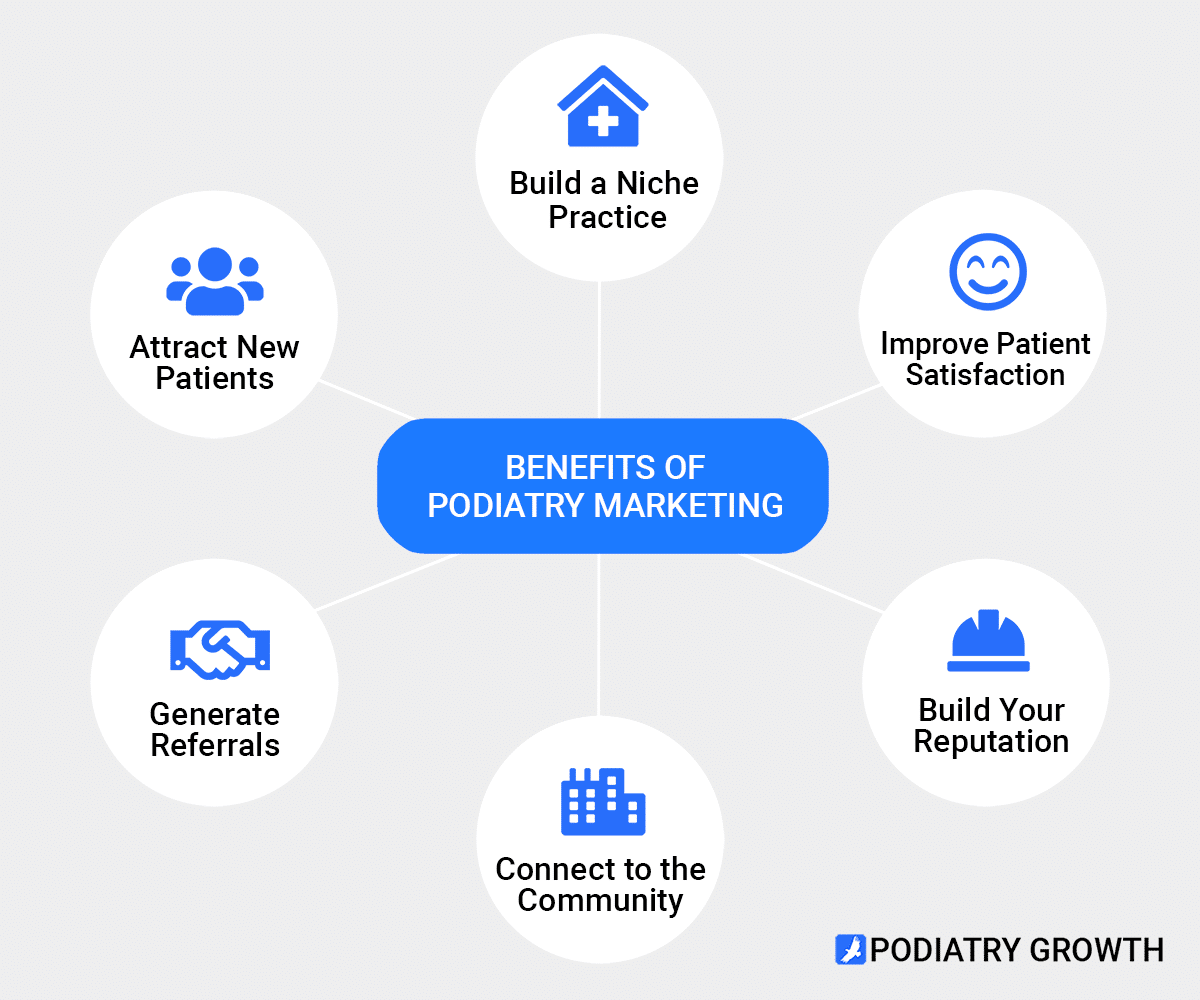
Consider these benefits:
- Visibility: Potential patients discover your clinic exists
- Credibility: Reviews and content establish you as the local expert
- Patient Flow: A predictable source of new patients, not just referral luck
- Right-Fit Patients: Attract the patients you actually want to treat
- Practice Value: A strong online presence increases your practice’s worth
Put another way:
Marketing is about investing in yourself and your practice. When consistent efforts are made, the benefits compound over time.
With that, it’s time for chapter 2.
Chapter 2:
The Patient Journey
In this chapter, I’ll show you podiatry marketing from a different perspective, the patient.
We’ll follow the path of a patient from a stranger to a practice promoter.
Let’s go.
What is the Patient Journey?
How do patients end up in your waiting room?
Sure, you have that “How did you hear about us?” or Referring Physician box on your intake forms. But when’s the last time you really put that information to use?
To better understand your patients, it’s helpful to walk in their shoes.
The patient journey is the sum of experiences patients have when interacting with you and your clinic.
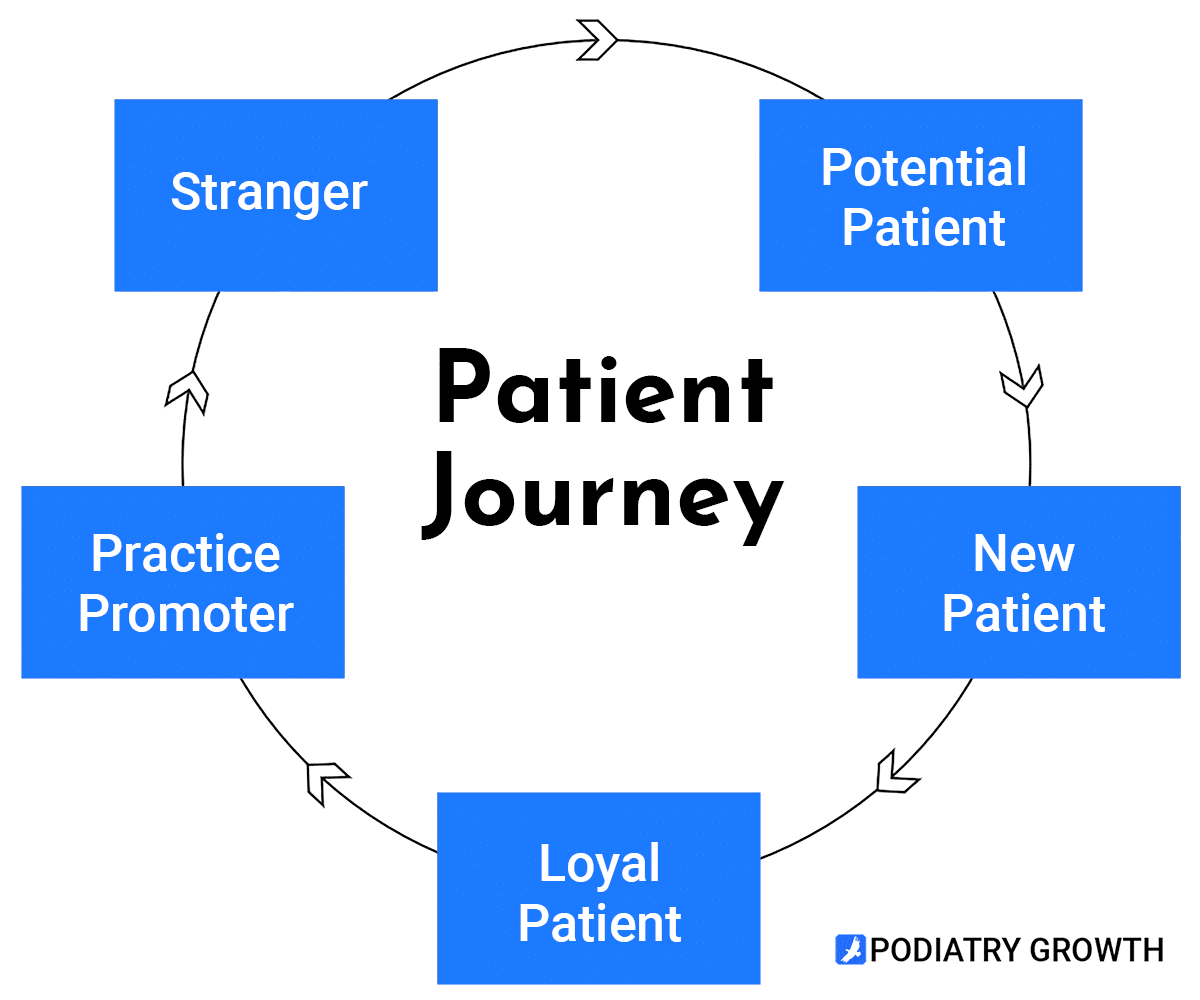
Here’s a look at each step along the patient journey:
- Stranger → They don’t know you exist
- Potential Patient → They’ve found you, now they’re evaluating
- New Patient → They’ve been scheduled and come in
- Loyal Patient → They keep coming back and refer when asked
- Practice Promoter → They actively tell others about you
Stranger
This is a pretty obvious one. These are people in your community who have never heard of you.
Unless you’ve previously built a strong online presence, this will likely be the largest segment of potential patients.
For your clinic to be considered, they first need to know that you exist. It’s only after discovering you online or offline that you become an option.
Here’s the key stat: 82% of smartphone users make a “near me” search. If you’re not showing up in those results, you’re invisible to most of your potential patients.
Potential Patient
Now that they’ve heard of you, your clinic can now be considered. But just being familiar isn’t enough for them to schedule an appointment.
Next, you must build trust and show that you’re the expert with the skills and experience to solve their problems.
Potential patients will perform online and offline research. Do patient reviews, your website and other information sources help or hurt your reputation?
91% of patients trust online reviews as much as personal referrals. What does your Google Business Profile say about you?
Once a patient feels confident that you can deliver the solution, they’ll schedule an appointment.
New Patient
Now, marketing switches from primarily taking place outside the clinic to within.
Each way a person comes in contact with your clinic – before, during, or after an appointment is called a touchpoint.
The good news is that you can influence or directly control many patient touchpoints:
- How easy it is to schedule (online booking vs. phone tag)
- Appointment reminders (automated texts or nothing at all)
- Wait time and front desk experience
- The care you provide and how you communicate
- Follow-up and billing clarity
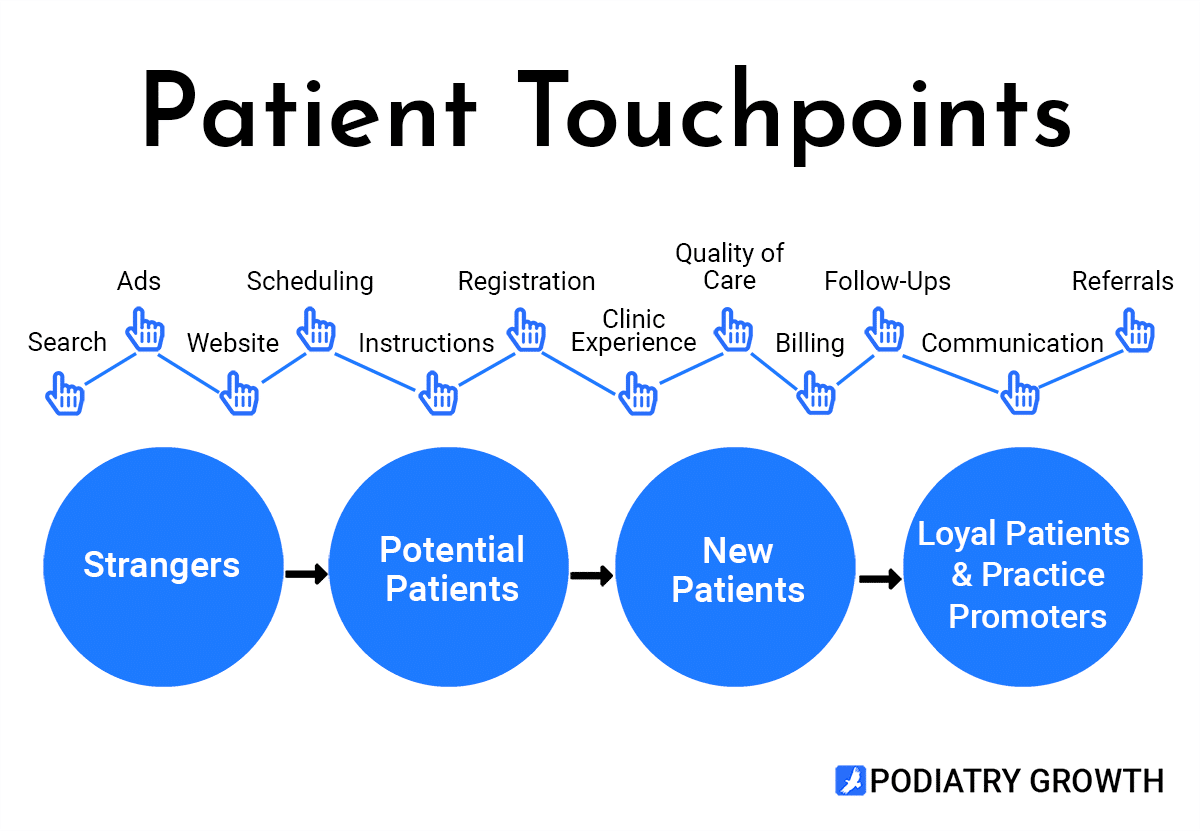
While the quality of care you provide and the results you achieve are essential, these are only a portion of the patient’s experience. The total sum of these touchpoints will determine how patients view you and your clinic.
For example, let’s say you completely relieve a patient’s heel pain on the first visit. But from her perspective, it was difficult to find parking, schedule a follow-up appointment, and there was an issue with billing.
How well do you think the patient will judge her experience?
Loyal Patient
If you can provide a tremendous overall patient experience, a new patient will become a loyal patient.
Now that they’re a loyal patient, they see you as “their foot doctor.” If other friends and family have foot and ankle issues, they’ll happily refer when asked.
They might even interact on your social media accounts or forward your patient email newsletter to others.
Practice Promoter
Sometimes you connect with a patient, and they want to tell everyone they know about you and your clinic.
Practice promoters aren’t necessarily a new category. They’re the most vocal of your loyal patients. They create positive leave online reviews and the trust they pass along by word of mouth is a valuable source of new patient referrals.
Moving someone from a stranger to a practice promoter is the ultimate goal of any successful podiatry marketing plan.
Next, we’ll talk about the two types of marketing.
Chapter 3:
Offline Marketing Basics
This chapter introduces you to a specific type of marketing: offline marketing.
I’ll provide a working definition and show you a real-world example.
You’ll learn the pros and cons of offline marketing.
What is Offline Marketing?
Offline marketing is any type of marketing that isn’t on the Internet. This means the Yellow Pages, TV, direct mail, phone, and billboards.
From creating a referral network to sponsoring a hometown youth sports team, offline marketing plays a vital role in reaching local audiences.
This is a form of advertising those of us who are 40+ grew up with. So, older generations are generally easier to reach through offline marketing than online marketing.
The dozens of Brian Urlacher billboards I see when driving to Chicago’s O’Hare Airport are an example of offline marketing.

(Just my opinion, but I think he looked better bald.)
Podiatry Clinic Example

Let’s examine a hypothetical podiatry billboard more closely to understand what offline marketing looks like in practice:
- Goal: Create awareness of the clinic and the new location.
- Content: Position Family Foot Care as “the best care” and announce a new clinic location.
- Creative: Clean, professional design with a message that they are the “best care,” two different foot images, but no phone number or website address.
- Intended Audience: Local residents with feet and toes.
- Location: N/A, but it would make sense for the billboard to be close to their new or old clinic or where their ideal patients live.
- Relevance: Billboards are a form of “interruption advertising,” and this one has little relevance to most people driving by. Meaning that there’s a low likelihood that people who see the billboard are currently looking for foot care.
- Cost: If this billboard is located in a mid-sized city with decent traffic, the estimated all-in costs for six months would be between $18,000-$30,000.
The main objective of this billboard is to transform strangers into potential patients. The fact that they don’t provide a phone number or website address is a clear indication that they are not expecting to create new patients with this billboard immediately.
Is spending $30,000 for a billboard worth it? Chapter 6 will discuss creating a marketing system for your practice and how to estimate the return on investment of your marketing efforts.
Chapter 4:
Digital Marketing 101
Before digging into specific marketing strategies, it’s essential to understand the differences between offline and digital marketing.
A lot of people have heard of digital marketing, but still aren’t sure exactly what it is.
So let’s go and I’ll break it down for you.
What is Digital Marketing?
Compared to its offline counterpart, digital marketing is any form of marketing conducted online, such as email marketing and Google advertising. Digital marketing has become popular due to the cultural, technological, and societal shifts around us.
Digital marketing has become popular due to the cultural, technological, and societal shifts around us. As life becomes more digital, the way podiatrists market their services has evolved.
Not only is digital marketing sometimes more cost-effective than offline, but it’s also a more direct way to connect with potential patients.
78% of local mobile searches result in an offline purchase or visit. That means when someone’s searching for “heel pain treatment near me,” they’re ready to act.
Google Search Ads Example
Today, people search for everything online. So it shouldn’t be a shock that Google is a very common way to find and research foot and ankle care providers.
When the search term “podiatrist near me” is typed into Google, Google Ads, a map pack, and organic search results of potential options are displayed.
Creating a Google search ad campaign is one way to jump to the top of Google’s rankings.
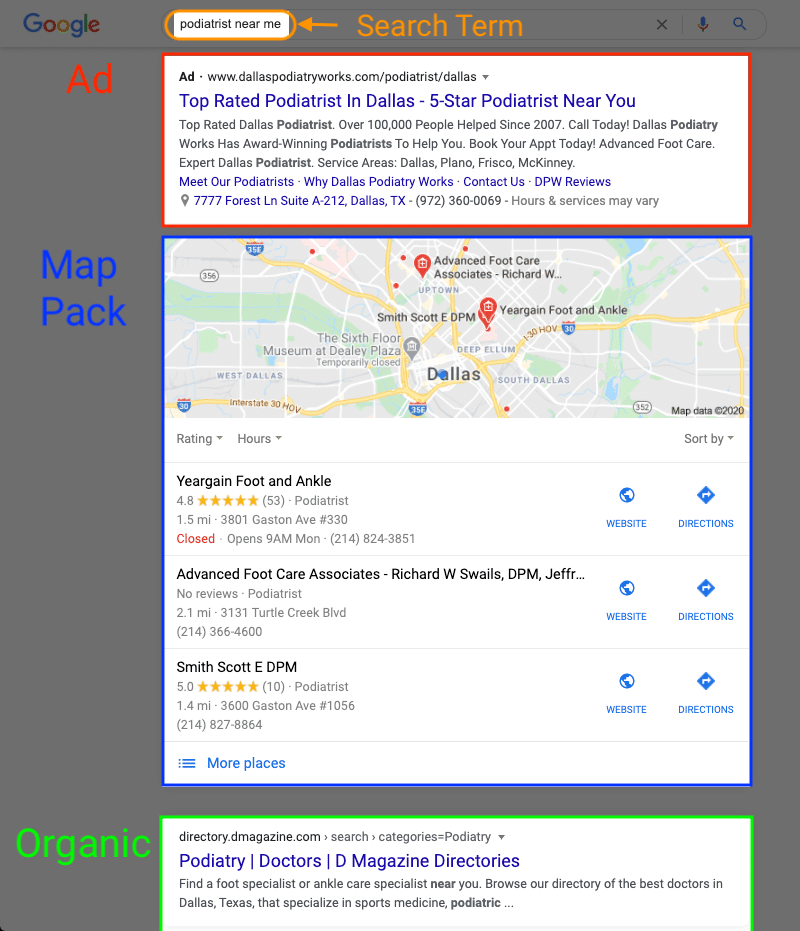
As you can see from the above example, creating a Google search ad campaign is one way to jump to the top of Google’s rankings.
The search was performed in Dallas, TX, so these ads will only be displayed to potential patients in that local area.
Let’s break down what makes Google Ads different from that billboard:

- Goal: New patients to schedule an appointment
- Content: Links to the clinic website, contact information, and encourages scheduling
- Intended Audience: People actively searching for a podiatrist right now
- Relevance: High. Matches the searcher’s desire to find a podiatrist—doesn’t rely on interruption
- Cost: Total cost for six months of Google search ads: ~$6,000-$12,000 (including management)
A well-organized Google search ad campaign can:
- Raise awareness to transform strangers into potential patients
- Provide the action step needed (booking an appointment) to move from a potential patient to a new patient
Instead of interrupting, matching a patient’s search intent with a relevant Google Ad is a powerful form of digital marketing.
The bottom line: That billboard costs $18,000-$30,000 and reaches everyone—including thousands who will never need foot care. Google Ads costs $6,000-$12,000 and reaches only people actively looking for a podiatrist.
Learn more about Google Ads in my in-depth guide for podiatrists.
Chapter 5:
AI & Podiatry Marketing
In this chapter, I’ll cut through the AI hype and show you what’s actually relevant for your podiatry clinic in 2026.
You’ve probably heard that AI is changing everything. And there’s truth to that—but most of what you’re hearing is either too technical or doesn’t apply to a private practice podiatrist.
So let me break down what actually matters for you and your practice.
How AI is Changing Patient Search Behavior
Here’s the big shift: patients aren’t just typing into Google anymore. They’re asking questions to AI assistants like ChatGPT, Google’s AI Overviews, Siri, and Alexa.
Instead of searching “podiatrist near me,” patients are asking questions like: “What’s the best podiatrist in [your city] for heel pain?” or “Should I see a podiatrist or orthopedist for my bunion?”
This shift toward conversational search is one reason healthcare organizations increasingly view AI as transformative—it’s changing how patients find and choose their providers.
What does this mean for you? Two things:
- Your Google Business Profile matters more than ever. AI tools pull information from Google to answer questions. If your profile is complete, accurate, and has strong reviews, you’re more likely to be recommended.
- Your website content needs to answer real questions. AI systems look for helpful, authoritative content. Pages that explain conditions, treatments, and what patients can expect will perform better than thin “about us” pages.
AI Chatbots: Do You Need One?
Let me be honest: most solo podiatry practices don’t need an AI chatbot on their website right now.
Here’s when a chatbot might make sense:
- You’re getting 50+ website visitors daily
- You’re missing after-hours inquiries
- Your front desk is overwhelmed answering the same questions repeatedly
If that’s not you, don’t worry about chatbots. Focus on the fundamentals first.
If you do want to explore this, look for HIPAA-compliant options that can answer basic questions (hours, location, what insurance you accept) and capture contact information for follow-up. Expect to pay $50-$200/month for a decent healthcare chatbot solution.
AI Tools You Can Actually Use
Here’s where AI gets practical for a busy podiatrist. These are tools that can save you time without requiring technical expertise:
- Writing Patient Education Content. Tools like ChatGPT or Claude can help you draft blog posts about plantar fasciitis, diabetic foot care, or what to expect during a bunion consultation. You provide the medical expertise and review for accuracy—the AI helps with the writing.
- Responding to Reviews. AI can draft professional responses to patient reviews, which you can then personalize. This saves time while ensuring every review gets a response—something that signals to potential patients (and Google) that you’re engaged.
- Social Media Posts. If you choose to maintain a social presence, AI can help generate content ideas and draft posts. You still need to add your voice and review everything, but it speeds up the process.
- Email Subject Lines and Newsletters. AI is surprisingly good at suggesting subject lines that get opened. For patient newsletters, it can help you outline topics and draft content.
- Appointment Reminder Optimization. Some practice management systems now use AI to optimize when and how reminders are sent. SMS appointment reminders significantly reduce no-show rates
What AI Can’t Replace
Here’s what I want you to remember: AI is a tool, not a replacement for trust.
Patients aren’t just looking for information—they’re looking for connection. They want to see YOUR face on your website, YOUR team, YOUR clinic. They want to know who will be treating their mother’s diabetic foot or their child’s ingrown toenail.
Cookie-cutter AI-generated content won’t build that trust. Neither will stock photos of smiling people in lab coats.
What builds trust:
- Real photos of you and your team
- Genuine patient reviews
- Content that reflects your actual expertise and approach
- A website that feels like an extension of your practice
Use AI to save time on the administrative side of marketing. But never let it replace the authentic, human elements that make patients choose you.
The Practical Recommendation
Before you invest in any AI tools, make sure your foundation is solid:
- A claimed and optimized Google Business Profile with current photos, hours, and services
- A website that answers patient questions and makes it easy to book an appointment
- A system for collecting and responding to reviews
Once those are in place, consider how AI tools might help you do more with less time.
The podiatrists who will thrive in 2026 and beyond aren’t the ones using the most AI—they’re the ones using the right tools to support a practice that patients already trust.
Chapter 6:
Opportunities & Action
Now that you understand the basics of offline and digital marketing, it’s time to get tactical.
Specifically, I’m going to reveal the specific ways that marketing creates opportunities for patients to take action.
So without further ado, let’s look at how this happens.
Word of Mouth
A recommendation from a friend or family member is a strong signal to others that you can be trusted. When you provide exceptional care and opportunities for patients to share this experience with others, they will.
Positive word of mouth can happen both in the real world and online. Maybe a recent patient had a great experience and mentioned your clinic to her group of friends or left a glowing a 5-star Google review after receiving a request from you.
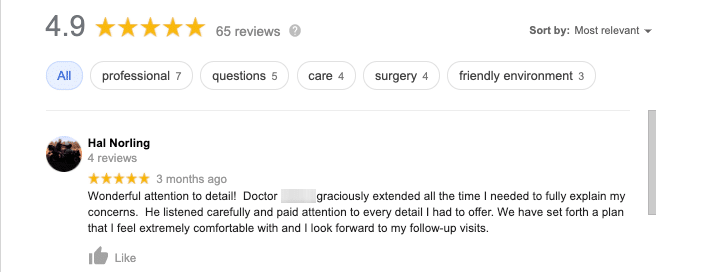
Tools that help:
- GatherUp ($99-$199/month) – Review requests via SMS and email. Most clinics see a 40% increase in reviews within 90 days.
- Swell ($250-350/month) – Automated review requests via SMS and email tied directly to your EMR software.
Digital and offline word-of-mouth help move people from Stranger → Potential Patient → New Patient.
Search
Whenever people have questions or problems, online search engines are generally the first places they look for answers.
If your clinic ranks high in Google’s map pack and organic results, it’s easier for potential patients to find your clinic contact information and website. This visibility makes it possible for potential patients to consider you as an option.
Search engine optimization or SEO is the practice of optimizing a website so it can be discovered and rank higher in Google search results.
Key stat: Clinics that consistently publish educational content about foot health see 50%+ higher organic traffic than those that don’t.
What this costs:
- Google Business Profile optimization: Free (but takes 2-3 hours to do properly)
- Professional SEO services: $500-$2,000/month, depending on competition in your area
- Professional website with SEO: $6,000-$12,000 initial investment
After reading reviews and your clinic website, people can move from Stranger → Potential Patient → New Patient.
Advertising
Whether on Google or Facebook, targeted online ads allow you to provide customized solutions to specific groups of people. Unlike a billboard that advertises to everyone who goes by, online ads are only shown to those who are the right patients for your clinic.

Google Ads generates an average of $8 for every $1 spent. That’s a big deal when you’re trying to fill your schedule with ideal patients.
Budget ranges:
- Starting out: $500-$1,000/month in ad spend + $300-$500/month for management
- Established practice: $1,500-$3,000/month in ad spend + management
- Multi-location: $3,000-$10,000+/month
With the ability to be relevant and reach the right people, advertising can move people from Stranger → Potential Patient → New Patient.
Communication
Communicating with your patients keeps them engaged with your practice and lets them know that you are genuinely concerned about their well being.
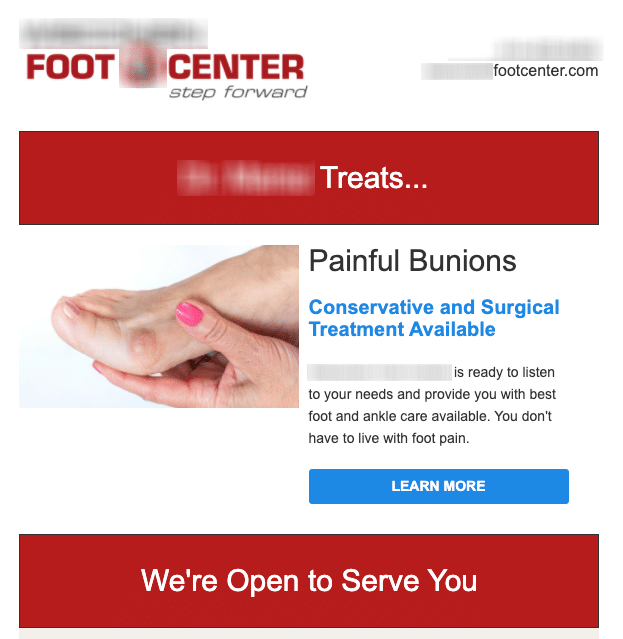
Patient email newsletters and surveys provide valuable feedback for you and your staff. These insights help you improve the patient experience and lead to higher patient satisfaction.
Communication tools:
- Kit.com (free for under 500 contacts) – Simple email newsletters
- Constant Contact ($12-$80/month) – More healthcare-focused email marketing
- Your EMR/PMS – Many now include automated appointment reminders and patient communication
The more patients you can turn into loyal patients and clinic promoters, the more success you’ll have. Communication moves patients from New Patient → Loyal Patient → Practice Promoter.
Patient Experience
Once the patient comes in contact with your practice, things change. As discussed earlier, patient touchpoints play a big part in the patient’s perception of you, your clinic, and their experience.
Providing an excellent patient experience creates loyal patients and can turn them into clinic promoters.
Quick wins for patient experience:
- Online scheduling – 80% of patients prefer a physician who offers online scheduling
- Text message reminders – Reduces no-shows by up to 45%
- Digital intake forms – Patients complete paperwork before arrival
- Post-visit follow-up – A quick text or email checking in after procedures
Patient experience moves people from New Patient → Loyal Patient → Practice Promoter.
Chapter 7:
Podiatry Marketing System
Where do you want to go with your practice?
What goals do you hope that podiatry marketing can help you achieve?
Creating a marketing system for your practice will remove the mystery and make success repeatable.
Why Create a System?
You should now understand the basics of podiatry marketing and the patient journey. Next, it’s essential to reflect on your previous efforts to build your practice.
Did you have a system in place to review and measure the successes/failures of your efforts?
If you’re not able to measure results, it’s challenging to understand which marketing efforts generate a return on your investment.
Here’s a list of some example questions to get you started with your review:
- Which procedures or patient population drive profitability?
- What is the lifetime value of a new patient (LTV) to your clinic?
- Is there a specific niche or procedure that you enjoy or provide a lot of value?
- How could you get more of those patients on your schedule?
- Where are your current new patients coming from? (Referrals? Google? Word of mouth?)
Going through this exercise will help you assess where you are currently and the direction you want to go. Then you’ll be able to measure and understand which marketing strategies are most beneficial to your practice.
Measure & Review
When creating a system, it’s essential to measure and review your progress.
Write down your goals so you can refer back to them later.
Here are a few common goals that can be measured to help you get started:
- New patient phone calls/month – Track via call tracking software or front desk log
- New patient online form submissions/month – Track via Google Analytics or your website platform
- Number of new patient visits/month – Track via your EMR
- Number of Google reviews/month – Aim for 4+ new reviews monthly
- Website goal completion rate – A healthy rate is 3-5% of visitors taking action
Once you have created these measurable goals, you can investigate and start testing digital marketing opportunities unique to you and your practice.
Your Marketing Options
There is no shortage of options, including:
- Google Business Profile (free, 2-3 hours to optimize)
- Website improvement ($2,000-$12,000 depending on scope)
- Online advertising – Google Ads ($800-$1,500/month to start)
- Search engine optimization (SEO) ($500-$2,000/month)
- Online review requests ($100-$300/month)
- Email marketing ($0-$80/month for most practices)
But to identify the most profitable ones, you need a system to measure and review the results of these campaigns.
Monthly Review Checklist
Spend 15-20 minutes once a month reviewing your marketing performance:
- How many new patient calls did we receive?
- How many online appointment requests?
- How many new patients actually came in?
- How many new Google reviews did we receive? What’s our average rating?
- If running ads: What’s our cost per new patient inquiry?
- What’s working that we should do more of?
- What’s not working that we should stop or change?
Creating a system allows you to see which marketing efforts are providing your practice with the best return on investment.
When you’re able to identify and reinvest in things that are working, your practice will reap the rewards.
Chapter 8:
Frequently Asked Questions
Got questions? You’re not alone.
These are the questions I hear most from podiatrists who are trying to figure out this whole marketing thing.
Let’s get you some answers.
Frequently Asked Questions
How much does podiatry marketing cost?
It varies widely based on your approach. At minimum, you can optimize your Google Business Profile for free and invest your time. A more comprehensive approach—professional website, SEO, and Google Ads—typically runs $1,500-$5,000/month. Most solo practitioners start with $500-$1,500/month and scale up as they see results.
Should podiatrists be on social media?
Most podiatry clinics should skip social media, at least initially. Your ideal patients aren’t scrolling Facebook looking for heel pain treatment—they’re searching Google when they have a problem. By spending your valuable resources on direct, measurable efforts like your website and Google Business Profile, you’ll generate a better return on your investment. If you have excess time and resources after optimizing your website and Google presence, then social media can play a supporting role.
What’s the best way for a podiatrist to get more Google reviews?
Ask consistently and make it easy. The most effective approach is automated SMS review requests sent 1-2 hours after an appointment. Include a direct link to your Google review page. Tools like GatherUp, Birdeye, or Podium automate this process. Most clinics see a 40% increase in reviews within 90 days of implementing a systematic approach.
How long does it take to see results from SEO?
SEO is a long-term investment. Expect to see meaningful improvements in 6-12 months. Google Ads, by contrast, can start driving traffic within days. Many practices use Google Ads for immediate results while building their organic presence through SEO for long-term sustainability.
Do I need a new website or can I improve my existing one?
It depends on your current site. If it’s mobile-friendly, loads quickly, and you can easily update content, improving your existing site might be sufficient ($2,000-$4,000). If it’s outdated, slow, or difficult to update, a new professional website ($6,000-$12,000) will likely provide better long-term value.
What should I prioritize with a limited marketing budget?
Start with the highest-leverage, lowest-cost opportunities: (1) Fully optimize your Google Business Profile (free), (2) Make sure your website clearly explains what you do and makes it easy to contact you, (3) Implement a system for requesting reviews. These three foundations will serve you for years and make any future marketing investments more effective.
Conclusion
Podiatry marketing doesn’t have to be complicated.
At its core, it’s about helping people with foot and ankle problems find you—and then delivering an experience that turns them into loyal patients who tell others about your practice.
The patient journey—from stranger to practice promoter—is your roadmap. Every marketing effort should move people along that path.
You don’t need to do everything at once. Start with your foundation: a claimed Google Business Profile, a website that answers patient questions, and a system for collecting reviews. Build from there.
The podiatrists who succeed with marketing are the ones who treat it like any other aspect of running their practice: with intention, consistency, and a focus on results.
Subscribe to the Newsletter
Share this Article on:
Build A Practice
You Love